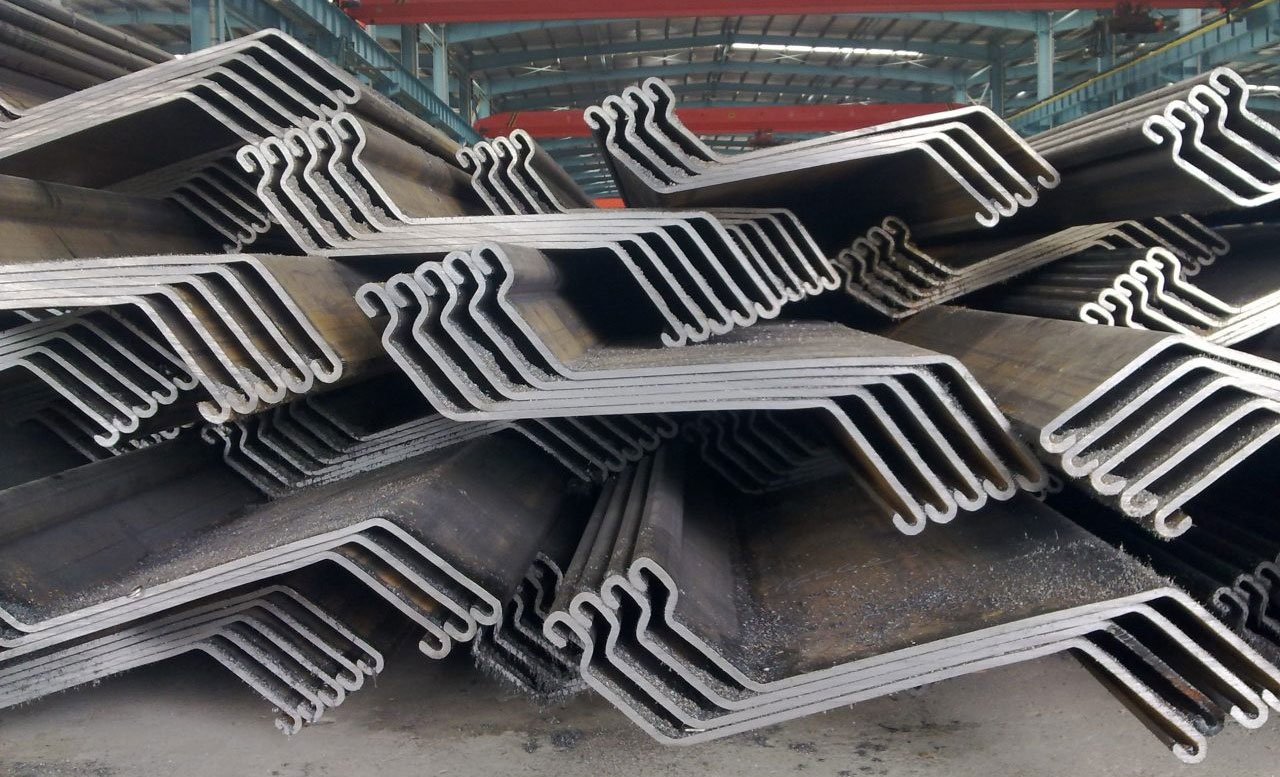
Sheet piles are widely used in civil engineering, infrastructure, marine, and construction projects where reliable soil retention and water control are required. Made with interlocking sections, steel sheet piles create a continuous wall that can resist lateral soil and water pressure. Therefore, they are suitable for both temporary and permanent construction applications.
From retaining walls and excavation support to marine structures and flood protection, sheet pile provide an efficient solution where conventional retaining systems may require more space or extensive construction work.
What Are Sheet Piles?
Sheet piles are interlocking structural sections that are driven into the ground to create a continuous retaining or cutoff wall. Steel is commonly used because of its strength, durability, and suitability for demanding construction environments.
Depending on the project requirements, sheet pile walls can be designed as cantilevered, anchored, or braced systems. They can also be installed using vibratory hammers, impact hammers, or hydraulic pressing equipment.
Sheet Piles for Retaining Walls
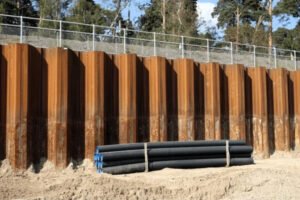
Sheet piles for retaining walls are used to hold back soil and prevent ground movement. They are particularly useful where construction space is limited or where a deep retaining structure is required.
They can be used for:
- Road and infrastructure projects
- Waterfront developments
- Temporary and permanent retaining structures
- Slope stabilization
- Urban construction projects
Moreover, their interlocking design helps create a continuous wall while providing structural support against lateral earth pressure.
Sheet Piles for Marine Construction

Sheet piles for marine construction are widely used in ports, harbor, waterfront developments, and coastal infrastructure. Marine environments expose structures to water pressure, waves, currents, and potentially corrosive conditions.
For this reason, properly selected sheet pile can provide durable structural support for marine projects such as:
- Waterfront retaining walls
- Dock structures
- Coastal protection systems
- Marine foundations
- Port infrastructure
The appropriate steel grade, section, coating, and corrosion protection should be selected according to project conditions.
Sheet Piles for Cofferdams
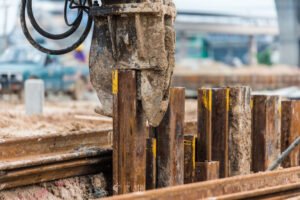
Sheet piles for cofferdams are commonly used to create temporary enclosed work areas in water. Interlocking piles form a barrier around the construction zone, allowing water to be controlled or pumped out.
As a result, workers can carry out foundation, bridge, pier, or marine construction work in a relatively dry environment.
Cofferdams are especially useful for projects involving:
- Bridge foundations
- Marine foundations
- River construction
- Harbour developments
- Underwater infrastructure
Sheet Piles for Excavation Support
Deep excavations can create significant lateral soil pressure and groundwater challenges. Sheet piles for excavation support provide a continuous barrier around the excavation area and help maintain ground stability.
They are frequently considered for basements, underground structures, shafts, utility projects, and other deep excavations.
In deeper excavations, sheet pile walls may be combined with walers, struts, or tie-back anchors to provide additional support.
Sheet Piles for Shoring Works
Sheet piles for shoring works help stabilize soil during construction. They are useful where nearby buildings, roads, utilities, or other structures could be affected by excavation.
Because sheet piles can be installed vertically to form a continuous wall, they can provide effective temporary support while construction activities are carried out.
Sheet Piles for Trench Support
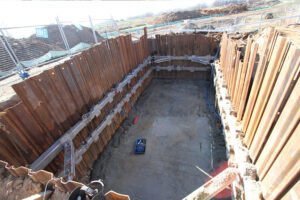
Utility and infrastructure projects often require trenches for pipelines, cables, drainage systems, and other underground services. Sheet piles for trench support can help prevent soil from collapsing into the excavation.
They can also be useful where groundwater is present or where the available working space is restricted.
Sheet Piles for Seawalls
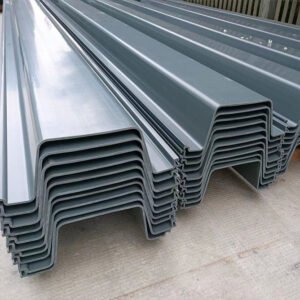
Sheet pile for seawalls provide a practical solution for protecting coastal areas from wave action, erosion, and water pressure. They can form vertical barriers along shorelines while also helping retain the soil behind the wall.
With suitable design and corrosion protection, sheet pile seawalls can be used for coastal infrastructure, waterfront properties, and marine developments.
Sheet Piles for Quay Walls
Quay walls are important components of ports and waterfront facilities. Sheet piles for quay walls can create retaining structures along the water’s edge while supporting loads from the land behind the wall.
Depending on the design, quay wall systems may incorporate anchors, tie rods, walers, capping beams, and other structural components.
Therefore, sheet pile systems can provide an efficient option for developing or upgrading waterfront infrastructure.
Sheet Piles for Ports and Harbours
Ports and harbours require strong structures capable of handling soil pressure, water loads, vessel-related activities, and heavy infrastructure. Sheet piles for ports and harbours can be used for quay walls, dock structures, retaining walls, and other waterfront applications.
Their relatively compact installation footprint also makes them useful where space is limited around busy marine facilities.
Sheet Piles for Flood Protection
Flood protection systems require barriers that can control water movement and protect surrounding infrastructure. Sheet piles for flood protection can be installed as floodwalls, cutoff barriers, and reinforcement systems for embankments.
They can also help reduce seepage and improve the stability of flood defence structures. Consequently, sheet pile systems are used in areas exposed to flooding, river overflow, and coastal water levels.
Sheet Piles for Bridge Foundations
Bridge construction often involves working close to rivers, lakes, or areas with unstable soil. Sheet piles for bridge foundations can be used to create cofferdams, temporary excavation support, and protection around bridge foundation works.
They can help isolate construction areas from surrounding soil and water while providing support during foundation construction.
Sheet Piles for Basement Excavation
Urban developments frequently require deep basement excavation where space is limited. Sheet piles for basement excavation can provide temporary or permanent earth retention around the construction area.
They are particularly useful when excavation is close to neighbouring buildings, roads, or existing infrastructure. Additionally, sheet piles can help manage groundwater conditions when designed and installed correctly.
Sheet Piles for Land Reclamation
Land reclamation projects involve creating usable land in coastal or waterfront areas. Sheet piles for land reclamation can be used to retain fill material and create boundaries between reclaimed land and surrounding water.
They can also form perimeter walls for waterfront developments, industrial areas, ports, and infrastructure projects.
Sheet Piles for Riverbank Protection
Riverbanks can experience erosion caused by water flow, flooding, and changing river conditions. Sheet pile for riverbank protection can create a strong vertical barrier that helps stabilize the bank and reduce erosion.
They can be used for riverfront infrastructure, embankment reinforcement, flood defence, and areas where traditional slope protection may not provide sufficient support.
Advantages of Using Steel Sheet Pile
Steel sheet piles offer several benefits for construction and infrastructure projects:
- High structural strength
- Interlocking wall formation
- Efficient installation
- Suitable for temporary and permanent applications
- Useful in restricted construction areas
- Effective for soil and water retention
- Suitable for marine and hydraulic projects
- Can be combined with anchors and bracing systems
- Reusable in many temporary applications
However, sheet pile selection should always consider soil conditions, groundwater levels, structural loads, installation conditions, corrosion exposure, and the required service life.
Choosing the Right Sheet Pile for Your Project
The correct sheet pile section depends on the project’s structural and environmental requirements. Engineers typically consider factors such as excavation depth, soil properties, water pressure, surcharge loads, required embedment depth, corrosion conditions, and installation method.
For marine and permanent applications, corrosion protection and long-term durability are particularly important. On the other hand, temporary excavation and shoring projects may prioritize installation efficiency and potential reuse.
Conclusion
Sheet pile provide a versatile solution for earth retention, water control, excavation support, and marine construction. From sheet piles for retaining walls and cofferdams to sheet piles for seawalls, quay walls, flood protection, and riverbank protection, their applications extend across a wide range of civil engineering projects.
Whether the requirement involves a deep excavation, waterfront development, bridge foundation, port expansion, or flood defence project, selecting the right pile system is essential for achieving a safe and reliable structure. With proper engineering, installation, and corrosion protection, steel sheet pile can provide dependable performance in challenging construction environments.
Comments are closed